
Criminal Court Cases in Mitchell County
Mitchell County divides criminal work by charge and stage. Superior Court hears felonies, including cases presented by accusation or grand-jury indictment. State Court handles misdemeanors and county traffic matters. Magistrate Court issues criminal warrants and conducts early proceedings, while municipal courts keep ordinance and fine-limited traffic dockets. Mitchell County belongs to the South Georgia Judicial Circuit, so circuit calendars can help place a Superior Court matter in context.
The Clerk of Superior Court and State Court keeps the filed case record. That file is distinct from the sheriff's incident report and jail booking entry. It can show what the prosecutor actually filed, what the judge ordered, and how the charge ended. Municipal and Magistrate records may remain with those courts, so first identify the court named on a notice, warrant, or case number.
Mitchell County Court Files
The Mitchell County clerk page identifies the Superior and State Court records counter at 11 W. Broad Street, Room 109, Camilla, Georgia 31730. Call 229-336-2021 before a trip, especially for an old file or a certified copy. The counter is open from 8:30 a.m. to 5:00 p.m. on weekdays. No official local copy-fee schedule was found, so ask about page, certification, and retrieval charges before ordering.
The county's clerk information is pictured below as a practical reference for Mitchell County court record access.
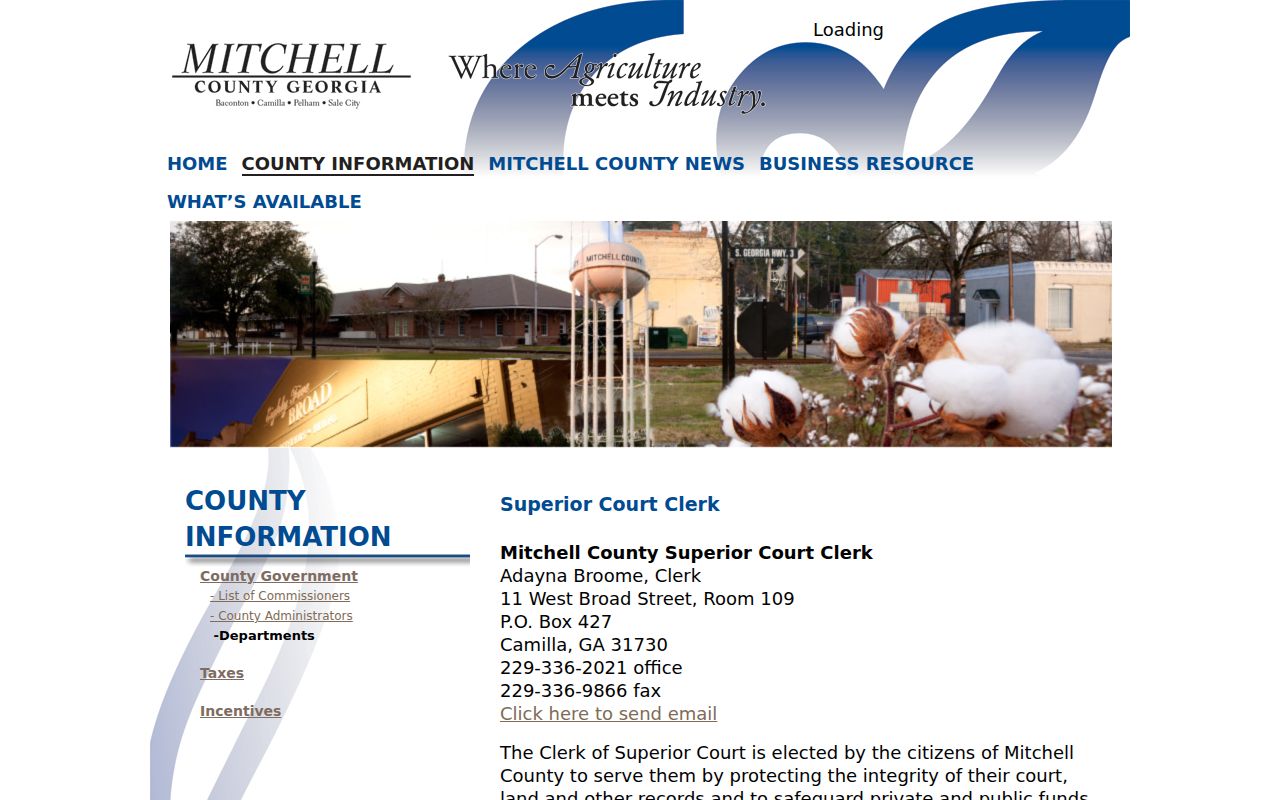
Use the clerk's direct details to request the docket sheet first. It gives a concise index to the pleadings, orders, hearings, and disposition that may need copies.
Mitchell County Case Record Searches
PeachCourt is the account-based e-access provider used for Mitchell County Superior and State Court searches. Registration is required. Online document coverage and charges vary, so a search result is an index rather than a promise that every pleading can be downloaded. Search by a precise case identifier when possible, or combine a party name with the county, court, filing year, and case type.
- Create or sign in to a PeachCourt account, then select Mitchell County and the proper Superior or State Court.
- Enter the case number when known. Otherwise search the party name and narrow the results by court and filing year.
- Confirm the county, court, case type, filing date, and party before treating a name result as the right case.
- Open the docket and read through the newest event, charge, status, hearing, and disposition entries.
- Ask the Room 109 clerk for an older, unscanned, or certified document that the online view does not supply.
| Field Label | Type | Required | Notes |
|---|---|---|---|
| County and court | Selection | Yes | Choose Mitchell and Superior or State Court. |
| Party name | Text | No | Use a full legal name and verify the match. |
| Case number | Text | No | The most exact search route. |
| Filing year | Filter | No | Helps separate similar names. |
| Case type | Filter | No | Narrows the docket category. |
The PeachCourt account interface shown below is the starting point for the Mitchell County court case lookup.

Keep the case number from a confirmed result. It is the best reference when contacting the clerk about a document or certification.
Mitchell County Court Warrants
A criminal case may start with a warrant and early review in Magistrate Court, but a felony prosecution moves to Superior Court after prosecutor review and an accusation or grand-jury indictment. That handoff can produce different record numbers and different wording. A warrant allegation is not the final filed charge.
The Mitchell County Magistrate Court page is the official source for its arrest-warrant role.
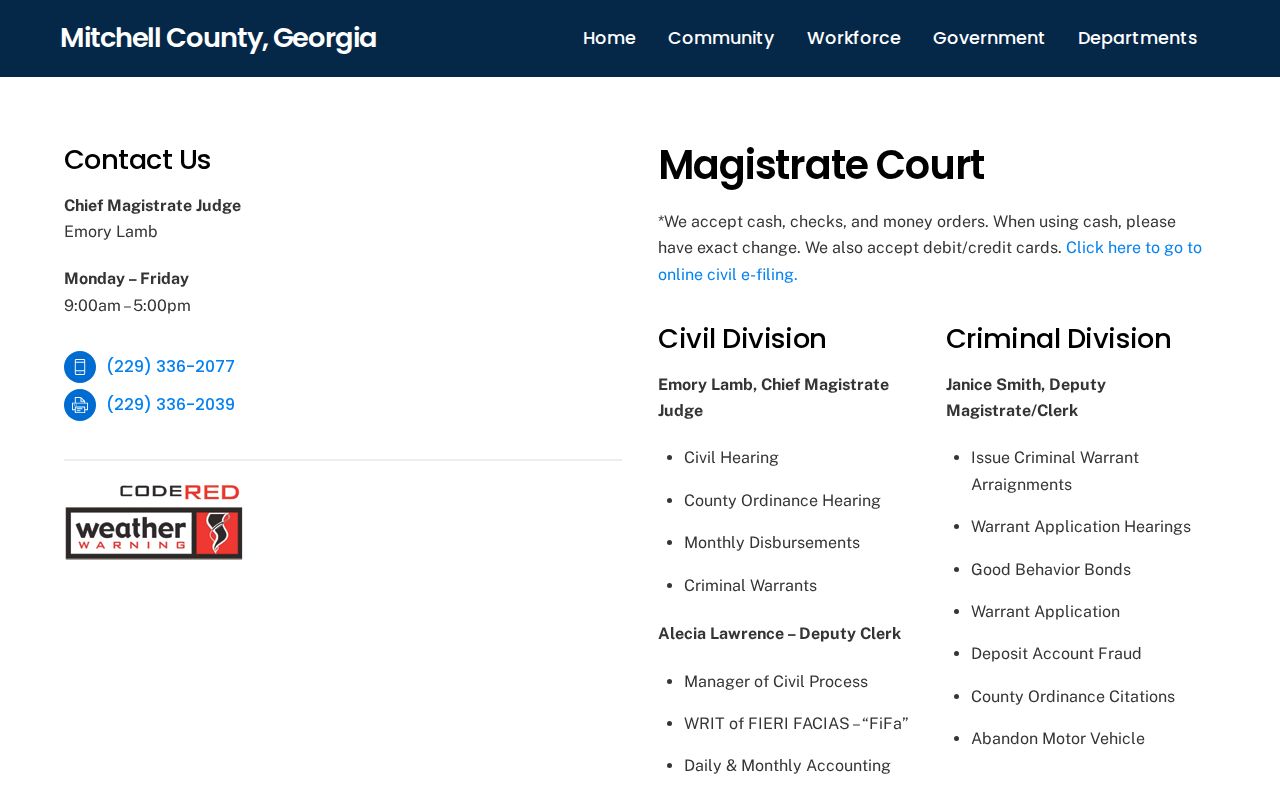
When tracing the matter forward, compare the warrant details with the later accusation or indictment and the clerk's final judgment.
Note: A bench warrant belongs to the court that issued it, while sheriff personnel may hold separate service information.
What a Criminal Case File Contains
A Mitchell County court file identifies the prosecution as it moved through one court. The docket sheet lists events in date order; the charging paper states the allegations that reached court; and the judgment records the result. Read those together. A case status without its last docket entries may hide a dismissal, plea, sentence, or later motion.
| Case Number & Court | Connects each document to the correct Mitchell County docket and division. |
|---|---|
| Charging Document | The accusation or indictment states the charges formally filed. |
| Docket Entries | A dated index of pleadings, orders, hearings, and case events. |
| Hearing Dates | Scheduled and completed appearances, subject to later calendar changes. |
| Disposition & Judgment | The outcome, such as dismissal, plea, acquittal, or conviction. |
| Sentence & Conditions | The court's punishment, costs, probation terms, or other ordered relief. |
Mitchell County Certified Court Copies
A screen view may help locate a case, but it is not the same as a certified court copy. Ask the Room 109 clerk which judgment, disposition, or docket document answers the need, then request certification if an authenticated copy is required. No current Mitchell County certification fee was found in the official research, so confirm the charge and delivery method with the clerk before ordering.
Supply the court and case number. If those are unknown, give the full party name and a narrow filing range, then let the clerk identify the file rather than asking the office to create a new compilation.
Mitchell County Criminal Docket Terms
Georgia docket language can be terse. These terms help distinguish a pause, a charging choice, and a final result in Mitchell County court cases.
- Nolle prosequi
- The prosecutor declines to continue the charge.
- Dead docket
- The case is placed inactive without a final termination.
- No-bill
- The grand jury declines to indict the proposed felony charge.
- True bill
- The grand jury approves an indictment.
- Disposition
- The final or current result recorded for the charge.
A docket may show a dismissal before GCIC receives the matching disposition. For an error in one's own statewide history, compare the certified judgment with the FBI electronic identity-history channel only when national self-review is needed.
The official FBI identity-history interface illustrates that separate subject-review route.
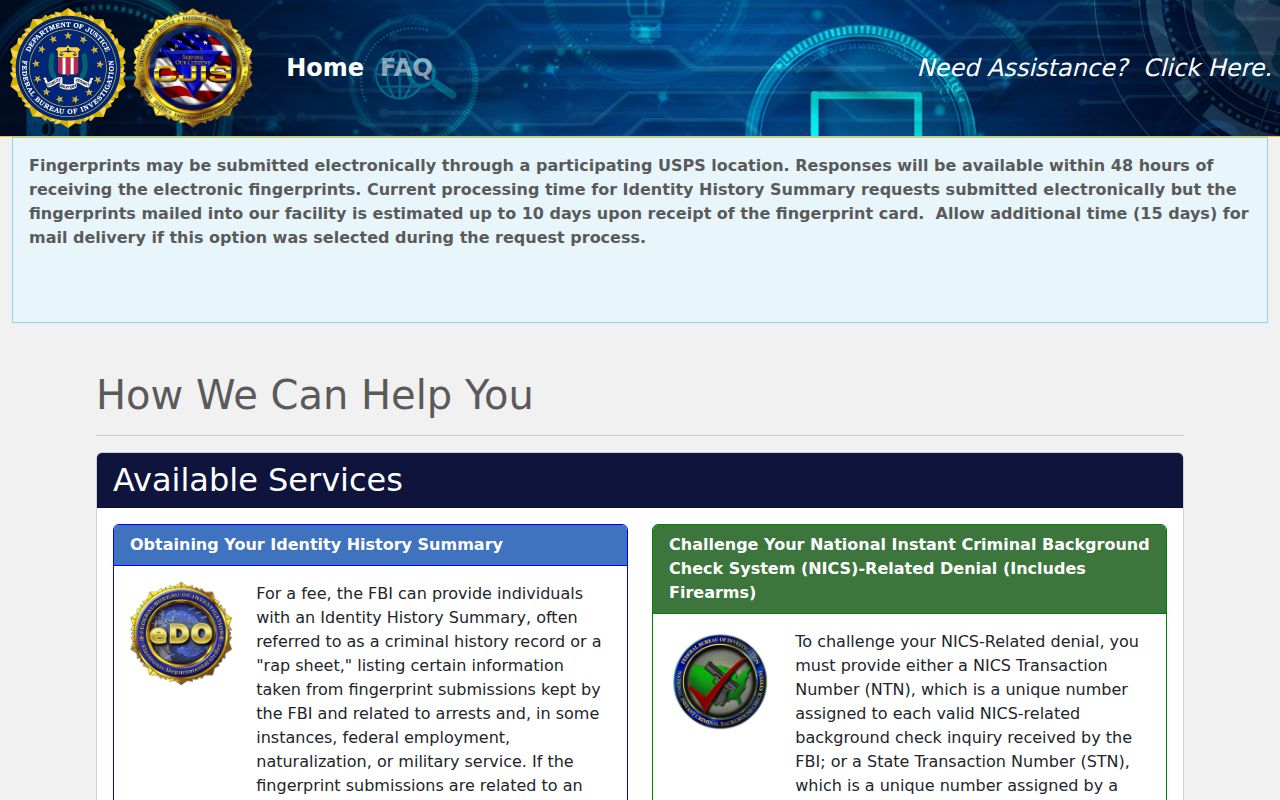
An FBI history is not a substitute for the full Mitchell County clerk file, which contains the actual pleadings and docket events.
Criminal Case Stages in Mitchell County
After an arrest or warrant, a magistrate addresses probable cause and release. The prosecutor then decides which charge, if any, enters court. A misdemeanor may proceed by accusation in State Court. A felony can proceed in Superior Court by accusation when allowed or by grand-jury indictment. Arraignment records a plea. Discovery and motions follow, then a negotiated plea or trial. The court enters the disposition and sentence, with appeals or post-judgment motions possible later.
Case flow: Charges Filed › Arraignment › Pretrial › Plea or Trial › Disposition › Sentencing
The South Georgia Judicial Circuit publishes circuit information and calendars. A calendar is useful for scheduling, but the clerk's docket remains the record of what occurred in a specific Mitchell County case.
Federal Cases Outside Mitchell County Courts
A federal prosecution arising in Mitchell County belongs to the Middle District of Georgia, not the county clerk's docket. PACER supplies federal dockets and filed documents after account registration. Its current fee is ten cents per page, capped at thirty pages per document, and quarterly charges of thirty dollars or less are waived. Federal opinions and courthouse terminal viewing can be free in stated circumstances.
The official PACER access page shown below marks this separate federal court channel.
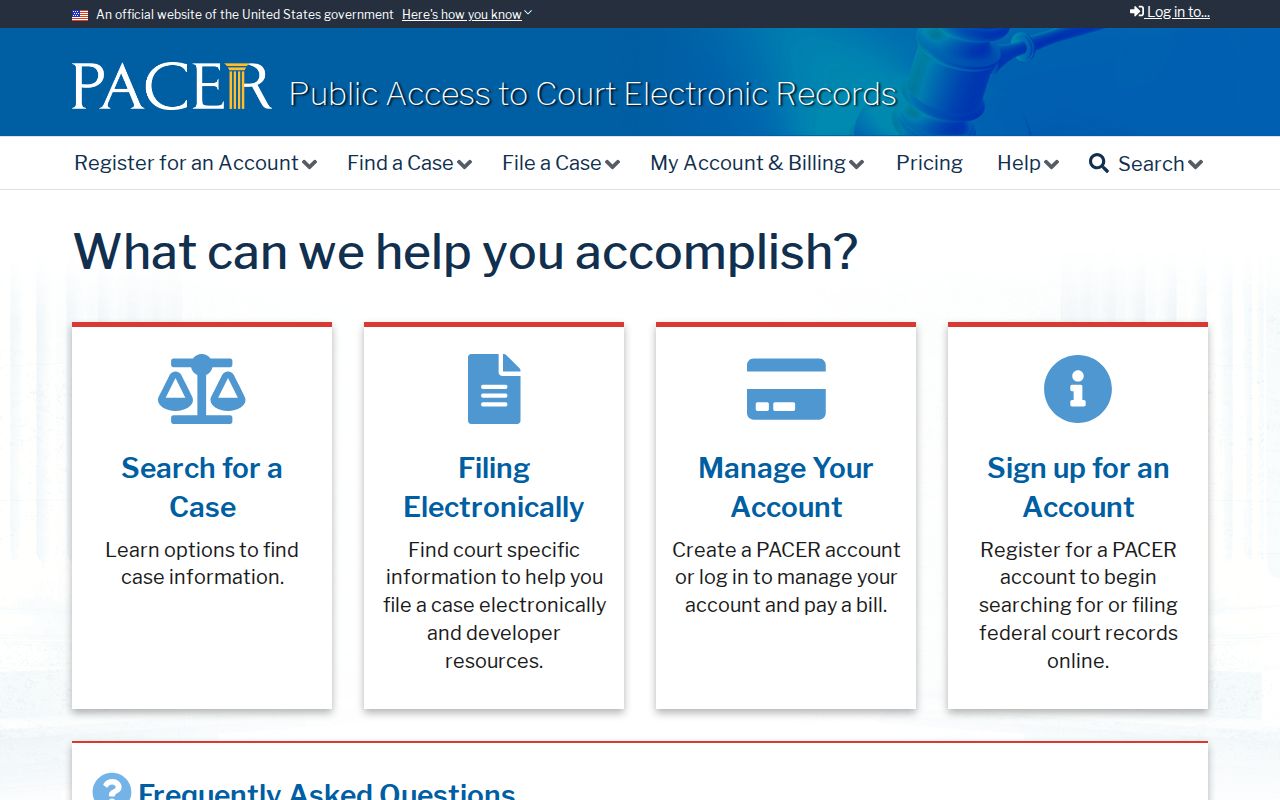
Do not expect PACER to return a Mitchell Superior, State, Magistrate, or municipal case. Those remain with the state or local court that created them.
Access Rules for Case Records
The Georgia Open Records Act presumes agency records open unless an exemption applies, but court access also follows court rules and orders. Juvenile material, protected victim data, sealed records, and sensitive identifiers may be withheld or redacted. A missing online result does not prove the file never existed.
Georgia uses “record restriction” for eligible criminal-history information, and court sealing may require a separate order. The Georgia Courts restriction resource explains the process. Older arrests can use a three-part form; newer eligible outcomes are often coded through prosecutor and court reporting.
The official restriction resource is shown below because restricted history and a sealed court file are related but not identical.
Ask the clerk about the precise docket when a restriction or sealing order should affect public access. Then inspect one's GCIC history to confirm the repository update.