
Mitchell County Sex Offender Checks
The Georgia Bureau of Investigation SORT portal is the main public search channel for Mitchell County. It accepts both name and place filters, displays results in list or map form, and opens a public profile for each selected entry. GBI manages the statewide system under O.C.G.A. §42-1-12, but local sheriffs collect registration information and report changes.
Mitchell County does not publish a separate county registry search. For a local question, call the Mitchell County Sheriff's Office at 229-336-2030. The office is at 4815 Highway 37 East in Camilla and operates around the clock, though registration appointments and office hours should be confirmed by phone. Use the sheriff for suspected noncompliance or to clarify locally reported information, not to replace the public statewide search.
The official GBI registry overview links the public search and explains the state's roles.
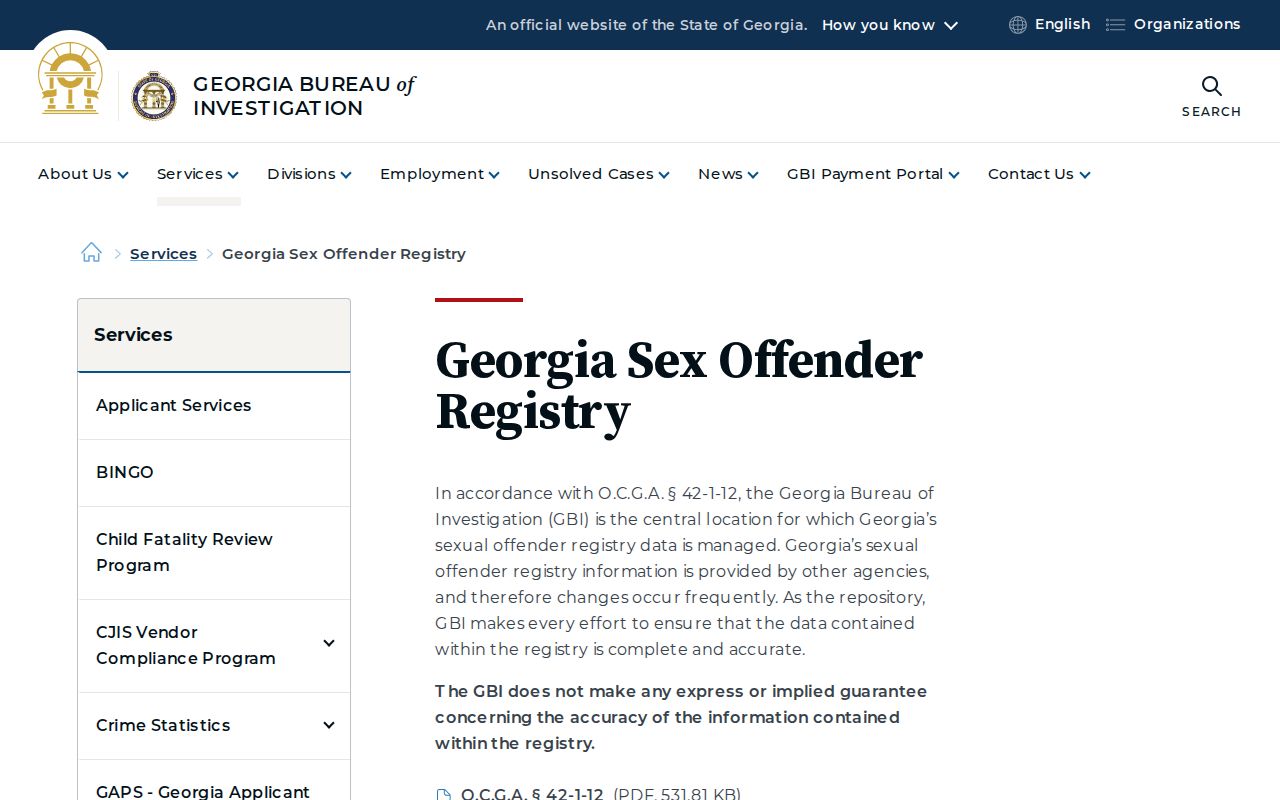
That overview is the best starting point when a portal link, legal explanation, or state contact changes.
GBI Data and Mitchell County Sheriff Verification
Registry work has two linked custodians. GBI maintains the public database and publishes statewide guidance. The Mitchell County sheriff receives in-person reports, verifies local facts, and transmits changes. Georgia generally requires a person subject to registration to report within 72 hours of release, placement, or entry into the state and to report relevant changes within 72 hours. The public registry is updated daily as agencies send information.
Daily updating does not mean every entry is guaranteed correct at every moment. GBI's conditions stress that agencies supply the information and that users should verify it. If a Mitchell County address appears old, compare the profile's last verification or update field, then call the sheriff. Give the registry ID, displayed name, address in question, and the reason for concern. Do not visit or confront the person shown.
Georgia Sex Offender Registry Searches
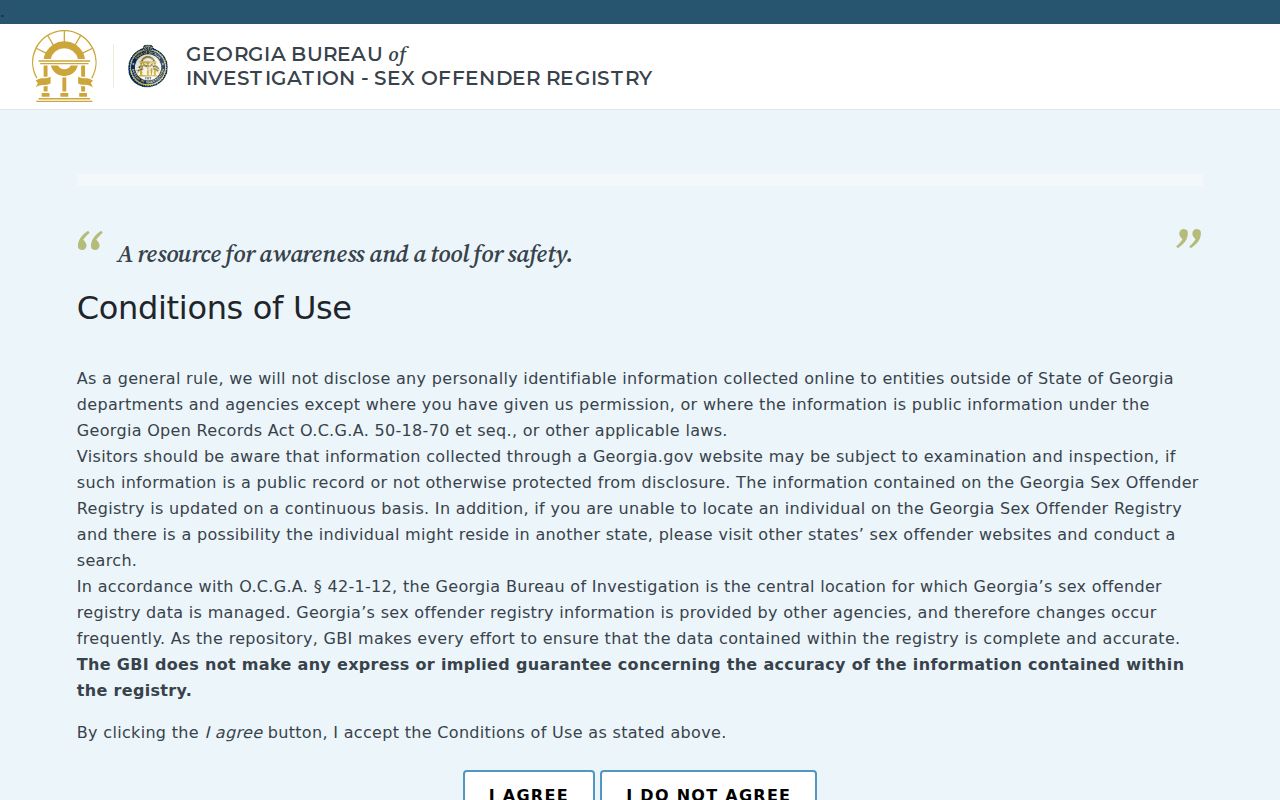
Open SORT and accept its Conditions of Use before searching. A geographic query is usually more useful for community awareness, while an exact registry ID is stronger than a common name.
- Open the official SORT search and agree to the conditions.
- Choose Mitchell in the County field, or enter a name, city, ZIP code, address, or registry ID.
- Review the list or map and compare name, photograph, location, and physical details rather than relying on one field.
- Open the full profile and note the status, registering sheriff, offense, conviction jurisdiction, and latest verification data.
| Field or control | Type | Required | How to use it |
|---|---|---|---|
| Offender Type | Dropdown | No | Narrows the portal category. |
| First / Last Name | Text | No | Use known spelling, then compare aliases. |
| Offender ID | Text | No | Targets an exact registry identifier. |
| County | Dropdown | No | Select Mitchell for county results. |
| City / ZIP | Text | No | Narrows results within or near a community. |
| Address / Radius | Address and choice | No | Supports a proximity search where offered. |
| Search / Clear; List / Map | Buttons and tabs | Not applicable | Runs, resets, or changes the results view. |
The official SORT interface shows these public search controls.
The form allows Mitchell County searches without naming a particular individual and makes both list and map review possible.
Use Mitchell County Registry Filters With Care
A county filter answers where the system currently associates a record; it does not reconstruct every prior residence or movement. City and ZIP terms can miss an address described under a nearby postal place. Radius searches depend on the address entered and the portal's mapping. Start broad with Mitchell County, then narrow the results and inspect individual profiles.
GBI also lists several reasons a person might not appear: the record may not yet have been submitted, the offense may not qualify, the person may be deceased and deleted, a query may be wrong, or successful First Offender treatment may affect inclusion. An empty search is not proof that no qualifying history exists. When the question concerns a known Georgia court case, compare the official court disposition rather than guessing from registry absence.
Registry Profiles: What They Show
A public profile combines identity, location, offense, and compliance information. Read it as a set. A photograph or name by itself is not enough to establish identity, and the conviction field describes the qualifying matter rather than every criminal case a person may have had.
| Name and aliases | Published names and alternate names tied to the registry entry. |
|---|---|
| Photo and description | Photograph, sex, race, age or date of birth, height, weight, hair, eyes, scars, marks, and tattoos where supplied. |
| Residence | Primary and secondary addresses reported through the registering agency. |
| Offense | Description or statute, conviction date, and conviction jurisdiction. |
| Other displayed facts | Vehicle, work, or school details where Georgia law makes them public. |
| Status and custodian | Compliance status, registering sheriff, and last verification or update. |
For the broader case sequence behind a listed conviction, use the Mitchell County Court Case Lookup and confirm the disposition with the clerk.
Mitchell County SORT and NSOPW Serve Different Searches
SORT is the direct Georgia source and provides the most focused county controls. The National Sex Offender Public Website combines public registry searches from participating jurisdictions, making it useful when a safety question crosses state or tribal boundaries. Run both when a person recently moved or the location is near a state line, but return to the contributing jurisdiction for the profile and verification.
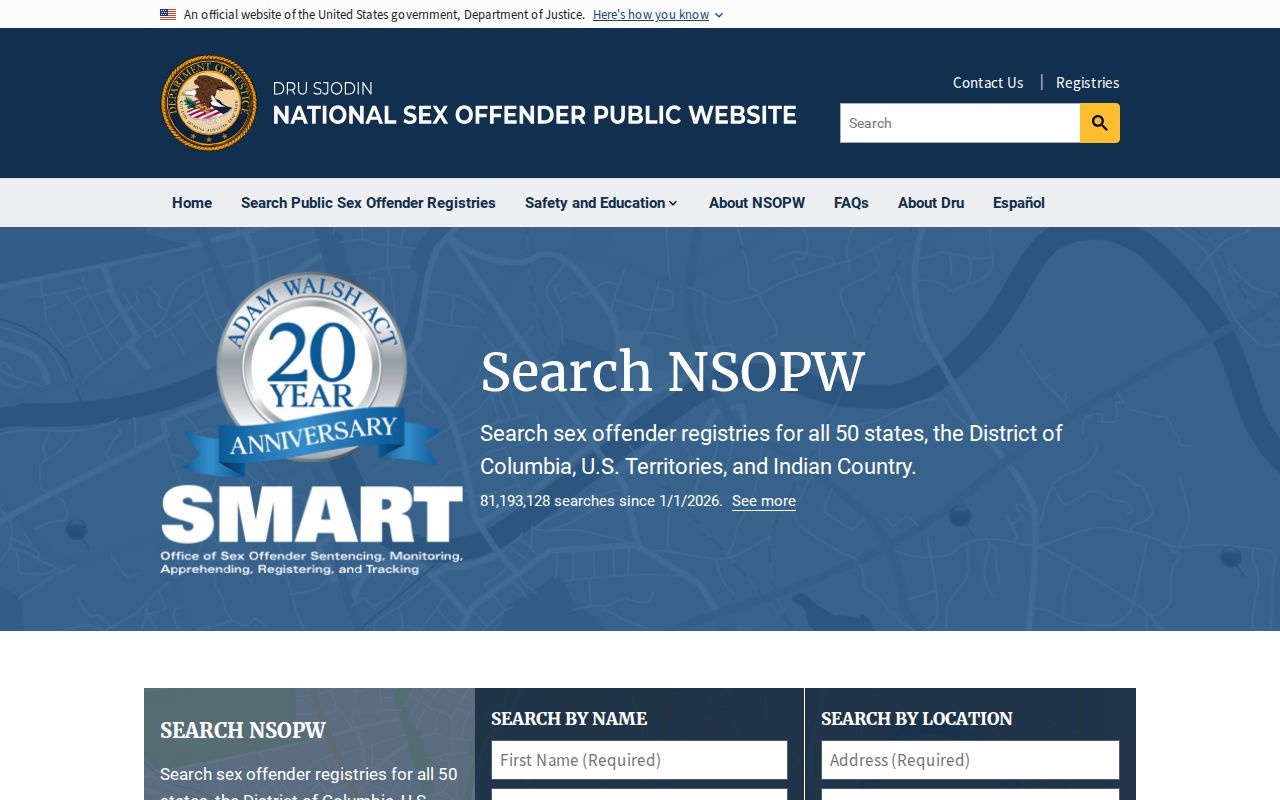
NSOPW expands geographic reach; it does not turn national results into a separate federal criminal history.
Registration Levels and Duties in Georgia
Georgia does not use the simple consumer chart sometimes described as federal Tier I, II, and III with fixed 10, 25, and lifetime terms. Classification, conviction date, offense, status, and any court relief all matter. Many Georgia registrants face lifetime registration. Annual renewal occurs around the registrant's birthday and includes an updated photograph and fingerprints; sexually dangerous predators have enhanced, semiannual duties.
| Georgia category | Public meaning | Duration and verification |
|---|---|---|
| Level I | Classified low risk | Generally lifetime registration; Level I may support a fact-specific release petition. Annual reporting generally applies. |
| Level II | Intermediate risk | Generally lifetime absent court relief or another statutory route. Annual reporting generally applies. |
| Sexually dangerous predator | Highest statutory designation | Lifetime registration with enhanced, semiannual verification duties. |
O.C.G.A. §42-1-19 permits narrow petitions for release in the Superior Court of conviction, or residence for an out-of-state conviction. Eligibility is fact-specific. One route considers ten years after completion of prison, parole, supervised release, and probation, or a Level I classification. A denial generally blocks a new petition for two years.
Federal Custody Is Not a Mitchell County Registry Result
A registry profile and a custody locator answer different questions. The Federal Bureau of Prisons inmate locator searches federal custody by number or by name, race, age, and sex. Its results can show a register number, release date, and location. It does not establish local registry compliance, and a released or not-in-custody result does not prove that a person has no state or local supervision.
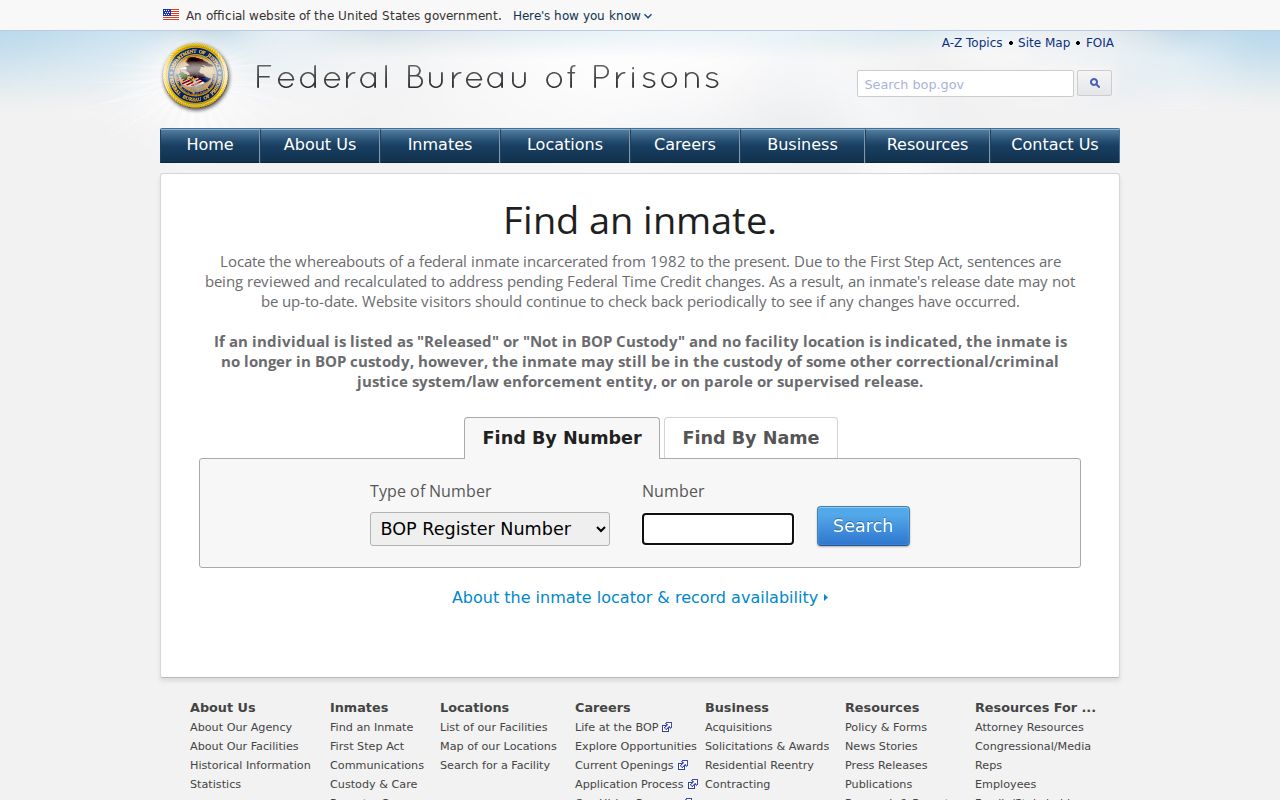
Use BOP only for the federal custody question, then return to SORT and Mitchell County authorities for Georgia registration status.
Report Suspected Mitchell County Noncompliance
When a Mitchell County profile appears to show an old address or a person may have failed to report, call the Mitchell County Sheriff's Office at 229-336-2030. Describe the public entry and the observed concern. Do not investigate the residence, publish accusations, or attempt contact. The sheriff can compare the tip with registration records and decide whether follow-up is warranted.
Failing to register, supplying false information, or missing birthday reporting can be a felony under Georgia law. That is an enforcement judgment for authorities, not a conclusion a member of the public should draw from a map pin. A lag, mapping issue, lawful secondary address, or data-entry error may explain an apparent mismatch.
Using Registry Information Lawfully
The registry exists to support public safety awareness. Families may use it to understand nearby public listings, confirm the details of a known entry, or plan sensible conversations about safety. Georgia data can change often, so verify key facts with the maintaining office and use the information in a measured way.
Do not harass or threaten anyone. O.C.G.A. §42-1-12 prohibits using registry information to harass or commit a criminal act against a registrant or the registrant's household. Never confront a listed person, engage in vigilantism, or treat a public profile as permission to intimidate or discriminate.
For broader context, the GBI crime statistics resources publish statewide reporting tools, not individual registry profiles.
These statistics help separate county-level public safety trends from claims about any one person on the registry.